Inca Trail Machu Picchu 4 Days: The Complete Guide 2026
The Inca Trail Machu Picchu 4-day trek is the most iconic hiking experience in the world. Every year, thousands of travelers from every corner of the globe book this legendary route to walk the same ancient stone path that Inca messengers and pilgrims traveled centuries ago. The classic Inca Trail Machu Picchu route covers 42 kilometers through cloud forest, high mountain passes and extraordinary archaeological sites before arriving at Machu Picchu through the legendary Sun Gate at sunrise. Furthermore, permits are strictly limited to 500 people per day and sell out months in advance. In this complete guide you will find everything you need: the full 4-day itinerary, 2026 permit and price information, packing list and insider tips from certified local Cusco guides.
Why Choose the Inca Trail Machu Picchu Trek?
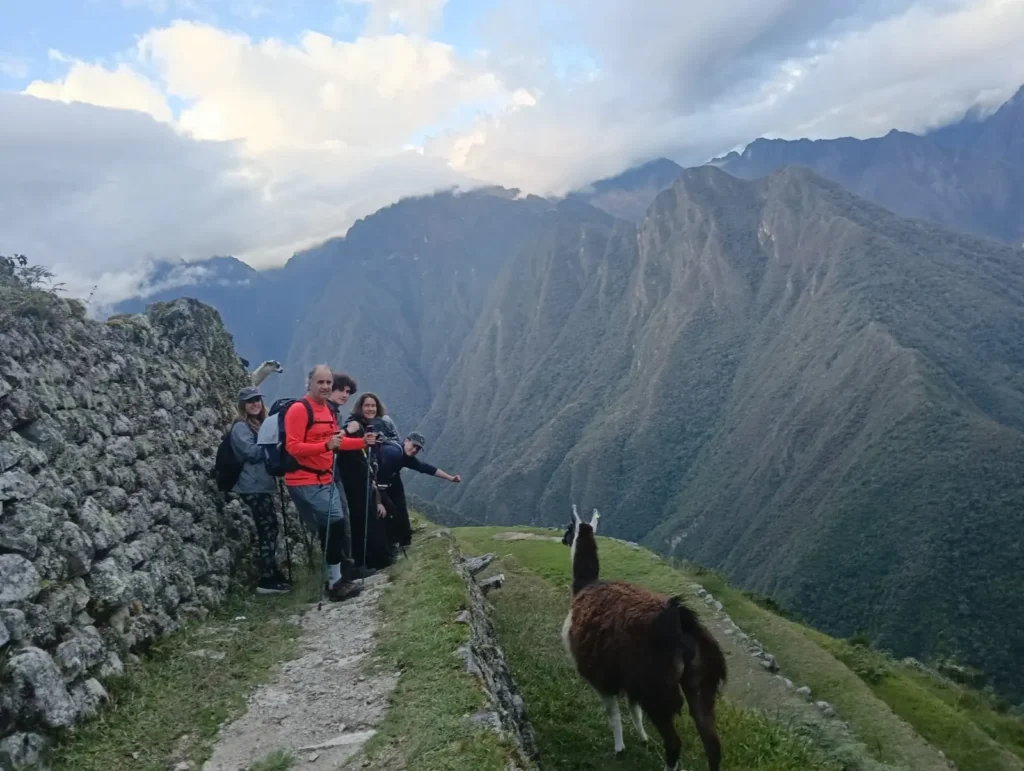
The Inca Trail Machu Picchu trek offers something no other route to the citadel can match: the experience of arriving at one of the world’s greatest archaeological sites on foot, through the Sun Gate, exactly as Inca travelers did centuries ago. Furthermore, the trail passes through four major archaeological sites. These include Llulluchapampa, Runkurakay, Sayacmarca and Wiñay Wayna. All appear before the final approach to Machu Picchu. trek represents a personal achievement that most travelers describe as a life-changing experience.
What Makes the Inca Trail Machu Picchu Unique?
Several factors combine to make the Inca Trail Machu Picchu route genuinely unlike any other trek in the world. First, the trail follows original Inca stone pathways that have remained largely intact for over 500 years. Furthermore, it passes through four major archaeological sites — Llulluchapampa, Runkurakay, Sayacmarca and Wiñay Wayna — before the final approach to Machu Picchu. Furthermore, the daily quota of 500 people keeps the trail uncrowded. Every site feels intimate and unhurried as a result. . In addition, the transition through multiple ecosystems — from high Andean puna to cloud forest to subtropical jungle — creates a constantly changing landscape that keeps every hour of the trek visually compelling.
Inca Trail Machu Picchu vs Other Routes
The Inca Trail Machu Picchu route stands apart from alternatives like the Salkantay Trek and the Lares Trek in one fundamental way: it follows the original ancient path and passes through Inca archaeological sites the entire way. Furthermore, no other route delivers the same Sun Gate arrival experience with the same historical authenticity. However, the Inca Trail requires advance permit booking months ahead, while the Salkantay Trek has no permit requirement. In contrast, the Inca Trail offers a more culturally and historically rich experience at a lower maximum altitude of 4,215 meters compared to the Salkantay Pass at 4,630 meters.
| Aspect | Inca Trail | Salkantay Trek | Lares Trek |
|---|---|---|---|
| Duration | 4 days | 4-5 days | 4 days |
| Distance | 43 km | 74 km | 45 km |
| Highest point | 4,215 m | 4,630 m | 4,400 m |
| Permit required | Yes | No | No |
| Archaeological sites | Multiple | Few | Few |
| Price range | $600–$900 USD | $280–$500 USD | $300–$500 USD |
| Book ahead | 3-6 months | 1-4 weeks | 1-4 weeks |
Inca Trail Machu Picchu 4 Days: Full Itinerary
The following day-by-day itinerary covers the standard classic Inca Trail Machu Picchu route used by all licensed operators. Furthermore, exact departure times and campsite locations may vary slightly between operators, but the core route, archaeological sites and highlights remain consistent throughout.
Day 1 — Cusco to Wayllabamba (3,000 m)
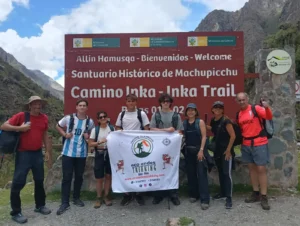
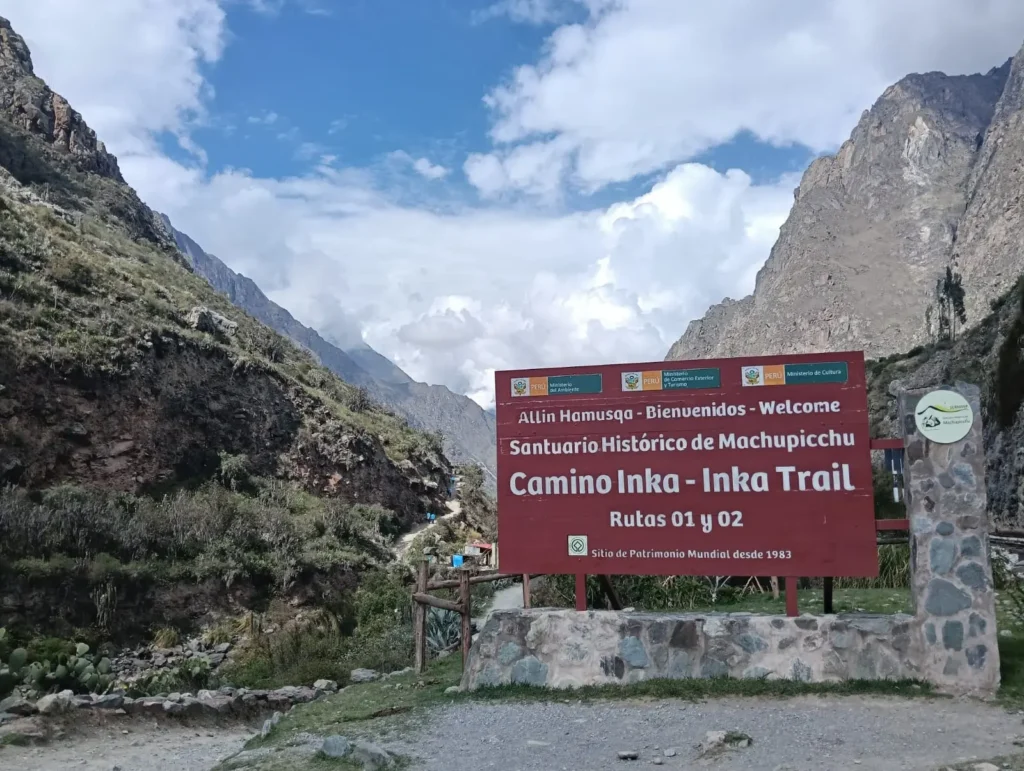
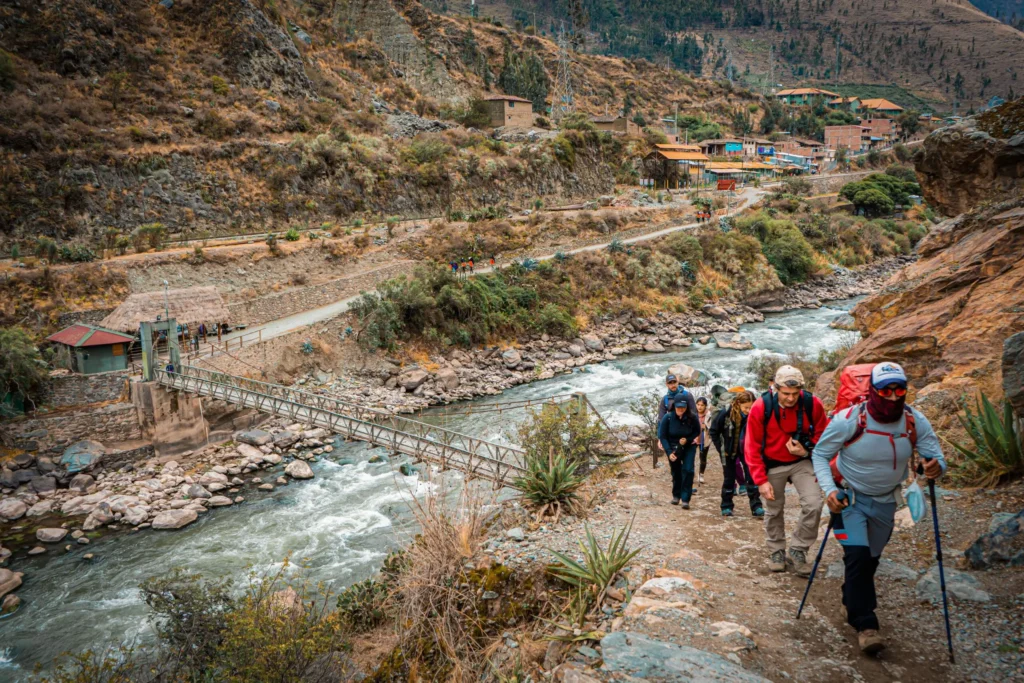
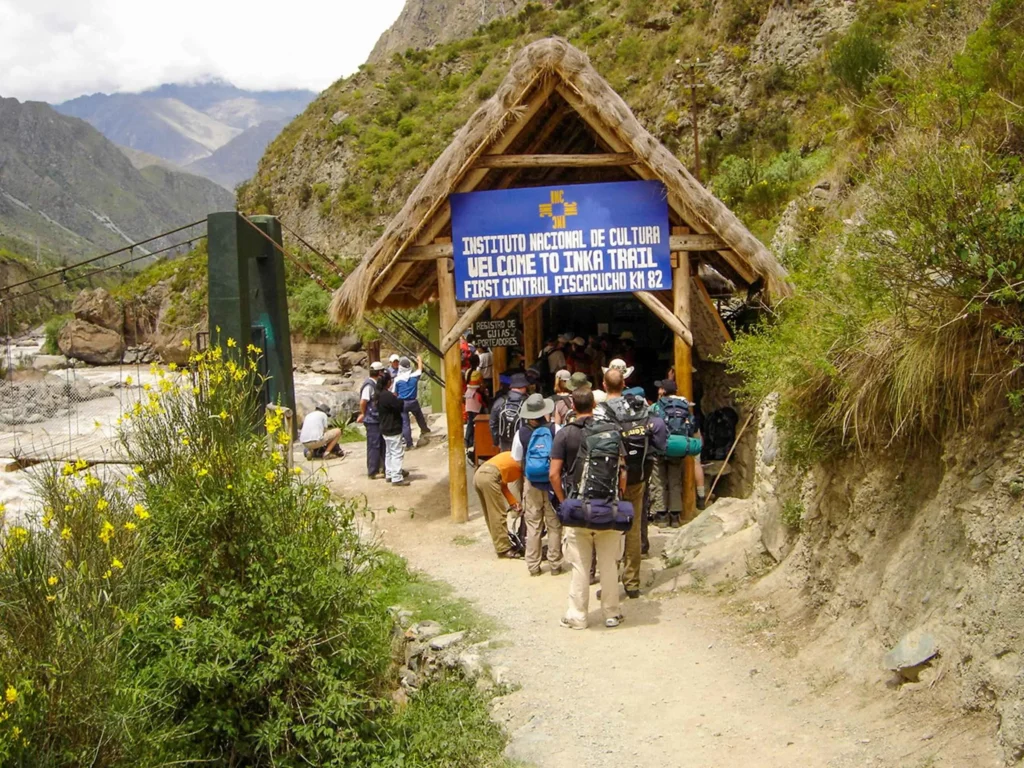
Your Inca Trail Machu Picchu adventure begins with an early pickup in Cusco between 5:00 and 6:00 AM. Your operator drives you to the official trailhead at kilometer 82 of the Cusco to Aguas Calientes railway, arriving around 8:00 AM. Furthermore, after permit verification and a trail briefing, the hike begins along the Urubamba River through open valley terrain.
The first day is the most gentle of the entire trek, covering approximately 12 kilometers on a relatively flat path that gives your body time to warm up before the challenging days ahead. Moreover, the trail passes through traditional Andean farming communities and the Inca ruins of Llactapata, offering the first archaeological encounter of the journey. As a result, day one delivers a perfect introduction to the landscape and culture of the Inca Trail without overwhelming first-time trekkers.
– Distance:12 km
– Elevation: 2,600 m to 3,000 m
– Difficulty: Easy to Moderate
– Overnight: Wayllabamba campsite
Day 2 — Wayllabamba to Reaching Dead Woman's Pass (4,215 m) to Pacaymayo (3,600 m)
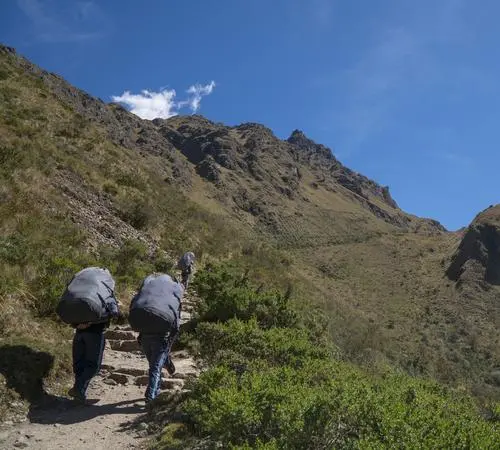
Day two is the most physically demanding stage of the entire Inca Trail Machu Picchu route. You wake at 5:30 AM for an early breakfast and begin the long ascent toward Dead Woman’s Pass — Abra de Huarmihuañusca — the highest point of the entire trek at 4,215 meters above sea level. Furthermore, the climb takes approximately 4 to 5 hours of sustained uphill hiking on original Inca stone steps through open puna grassland.
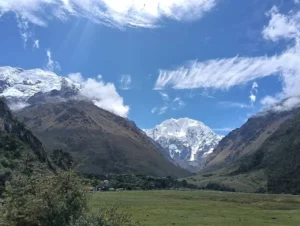
Reaching the summit delivers a profound sense of achievement and panoramic views across the Andean mountain range in every direction. Moreover, the descent from the pass to the Pacaymayo campsite covers a further 2 hours of steep downhill terrain on wet stone steps. As a result, trekking poles are strongly recommended for this section. In addition, altitude and physical fatigue make this the day most trekkers find hardest — and most rewarding.
-Distance: 12 km
-Highest point:Dead Woman’s Pass 4,215 m
– Difficulty: High
– Overnight: Pacaymayo campsite
Archaeological Sites on Day 3 — Pacaymayo to Wiñay Wayna (2,650 m)
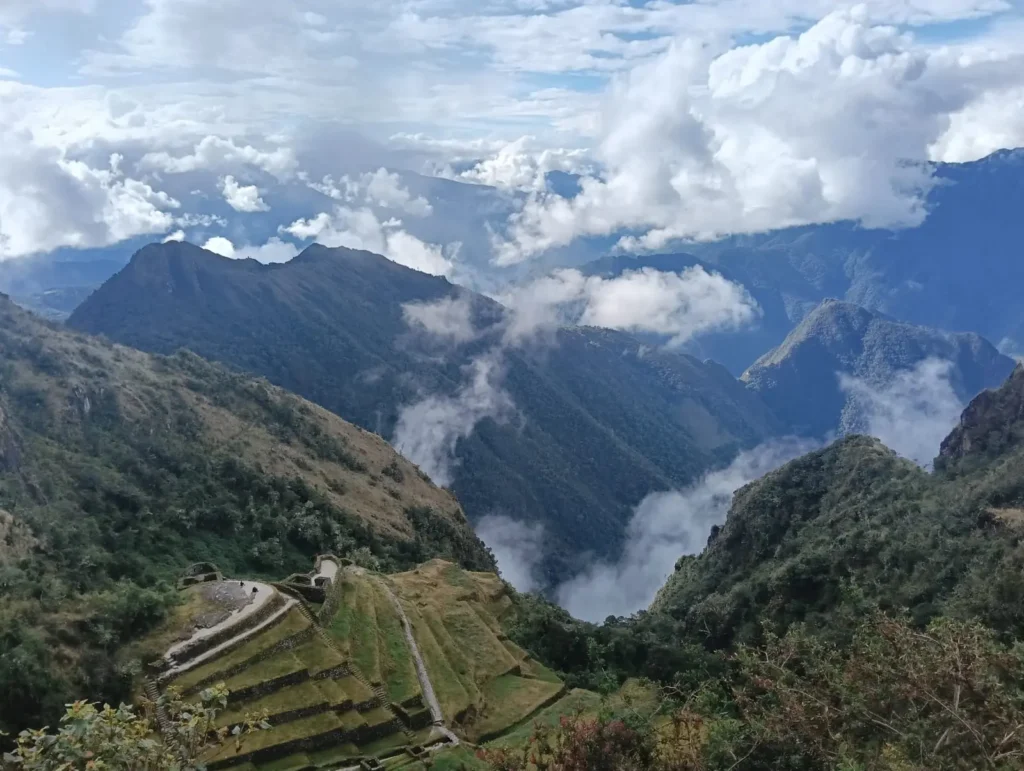
Day three combines the second mountain pass with the richest archaeological section of the entire Inca Trail Machu Picchu route. You cross the Runkurakay Pass at 3,950 meters in the morning and visit three major Inca sites: Runkurakay, Sayacmarca and Phuyupatamarca. Furthermore, each site sits directly on or beside the original trail and your guide explains the ceremonial and administrative function of each complex in detail.
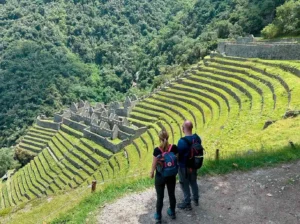
The afternoon descent toward Wiñay Wayna passes through increasingly lush cloud forest as the altitude drops. Moreover, Wiñay Wayna itself — a large terraced complex featuring ceremonial fountains — ranks among the most impressive Inca ruins on the entire route. In addition, arriving at the campsite with the afternoon still remaining gives you time to explore Wiñay Wayna thoroughly before the early start on the final day.
-Distance: 16 km
-Difficulty: Moderate to High
-Archaeological sites: Runkurakay, Sayacmarca, Phuyupatamarca, Wiñay Wayna
-Overnight: Wiñay Wayna campsite
Day 4 — Sun Gate to Machu Picchu and Return to Cusco
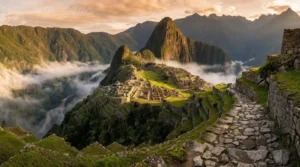
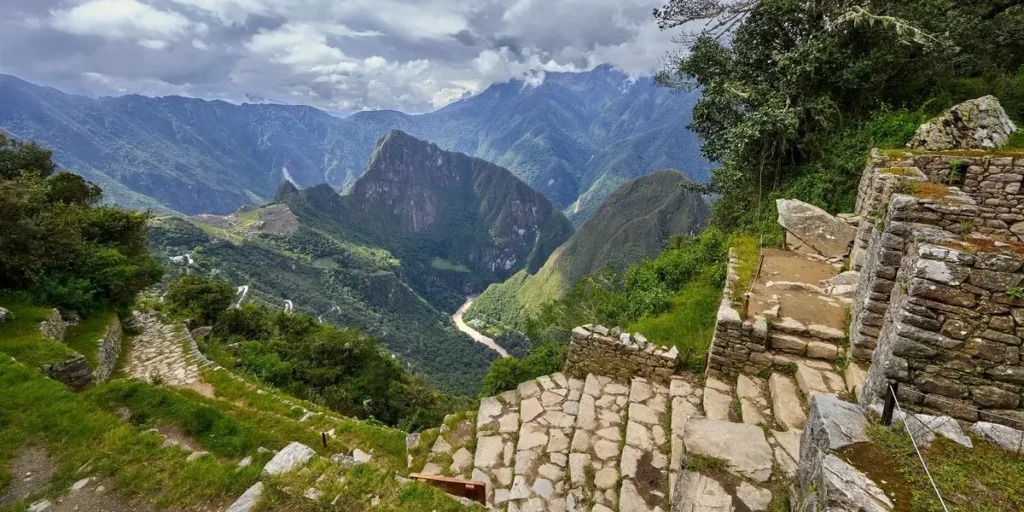
The final day of the Inca Trail Machu Picchu trek begins at 5:30 AM. You hike the last 4 kilometers from Wiñay Wayna to the Sun Gate in darkness, arriving just as the first light of dawn breaks over the mountains. Furthermore, Machu Picchu appears below through the morning mist in the valley — a moment that every trekker who completes the Inca Trail describes as the most powerful of their entire journey.
After the Sun Gate, the trail descends to the main citadel entrance. Moreover, your certified guide leads a comprehensive 2-hour tour of the main highlights including the Temple of the Sun, the Royal Palace, the Intihuatana stone and the classic postcard viewpoint. In addition, free time after the guided tour allows independent exploration, optional hikes to Huayna Picchu or Machu Picchu Mountain and lunch in Aguas Calientes before the afternoon train back to Ollantaytambo and bus to Cusco.
-Wake up: 3:30 AM
-Sun Gate arrival: Approximately 6:30–7:00 AM
-Guided tour: 2 hours
-Return to Cusco: Train and bus, arriving approximately 7:00– 8:00 PM
Inca Trail Machu Picchu Permits: Everything You Need to Know
The Inca Trail Machu Picchu permit system is the most important logistical element of planning this trek. Furthermore, understanding exactly how it works prevents the most common and costly planning mistake travelers make: leaving permit booking too late.
What Happens If Permits Sell Out
The Peruvian Ministry of Culture limits the Inca Trail Machu Picchu to 500 total people per day, including trekkers, guides, cooks and porters. Furthermore, this quota means that only approximately 200 independent trekker spots exist per day once staff allocations are counted. As a result, permits sell out extremely fast — often within hours of becoming available for peak season months. In addition, permits are non-transferable and linked directly to your passport number, making last-minute changes impossible.
How Far in Advance to Book
Book your Inca Trail Machu Picchu permit as early as possible. Furthermore, permits for June, July and August — the peak dry season months — typically sell out between 3 and 6 months ahead. May and September sell out 2 to 3 months in advance. During low season from November to April, 4 to 6 weeks ahead is usually sufficient. However, the trail closes completely every February for annual maintenance and conservation work. In addition, never assume availability exists close to your travel dates — always book the moment your travel dates are confirmed.
Inca Trail Machu Picchu Prices 2026
Inca Trail Machu Picchu tour prices vary depending on group size, service level and operator quality. Furthermore, the government permit fee is fixed for all operators. The Machu Picchu entrance ticket adds another fixed cost regardless of price level.
How to Get the Best Price
Four main factors determine the final cost of an Inca Trail Machu Picchu tour. First, the government permit costs approximately $200 USD per person and this fee remains fixed across all operators. Furthermore, the Machu Picchu entrance ticket adds $60 to $75 USD depending on the circuit chosen. Furthermore, operator quality affects the final price significantly. Guide certification, food quality, camping gear and group size all play a role. As a result, significant price differences between operators almost always reflect real differences in the quality of the experience delivered.
Price Ranges by Service Level
A budget Inca Trail Machu Picchu tour costs between $550 and $650 USD per person. This covers the permit, guide, cook, basic camping gear, meals and train return. Furthermore, a mid-range tour costs between $700 and $900 USD and adds better camping equipment, higher food quality and smaller group sizes of 8 to 10 people. In addition, premium tours from $900 to $1,200 USD include luxury camping gear, gourmet meals, professional photography services and private certified guides. Always verify that the government permit and Machu Picchu entrance ticket are included in the quoted price before confirming your booking.
What Is Not Included
Regardless of the price level, most Inca Trail Machu Picchu tours exclude the following additional costs. The bus from Aguas Calientes up to the Machu Picchu entrance costs $12 USD one way. Optional add-on tickets for Huayna Picchu Mountain or Machu Picchu Mountain cost $40 to $60 USD each. Furthermore, tips for your guide, cook and porters average $50 to $80 USD total for the 4-day trek. In addition, personal travel insurance with emergency evacuation cover is strongly recommended and costs approximately $50 to $150 USD depending on your home country and coverage level.
Inca Trail Machu Picchu Difficulty and Preparation
Physical Preparation
The Inca Trail Machu Picchu trek rates as moderate to high difficulty. Furthermore, altitude, distance and multi-day effort all demand specific preparation. Start preparing early to ensure a safe and enjoyable experience.
Start physical preparation at least 6 to 8 weeks before your Inca Trail Machu Picchu departure date. Furthermore, focus on long uphill walks of 2 to 3 hours carrying a loaded backpack on consecutive days. In addition, stair climbing and hiking on uneven terrain specifically prepares your knees and ankles for the original Inca stone steps on days two and three. As a result, travelers who prepare consistently arrive at the trail confident and perform significantly better throughout all 4 days.
Acclimatization in Cusco
Arrive in Cusco at least 2 to 3 full days before your Inca Trail Machu Picchu start date. Furthermore, Dead Woman’s Pass at 4,215 meters on day two represents the greatest altitude challenge of the entire trek. Proper acclimatization in Cusco reduces the risk of altitude sickness at this critical point significantly. In addition, drink 3 liters of water daily during acclimatization, consume coca tea regularly and avoid alcohol for the first 48 hours after arriving in Cusco.
What to Pack for the Inca Trail Machu Picchu Trek
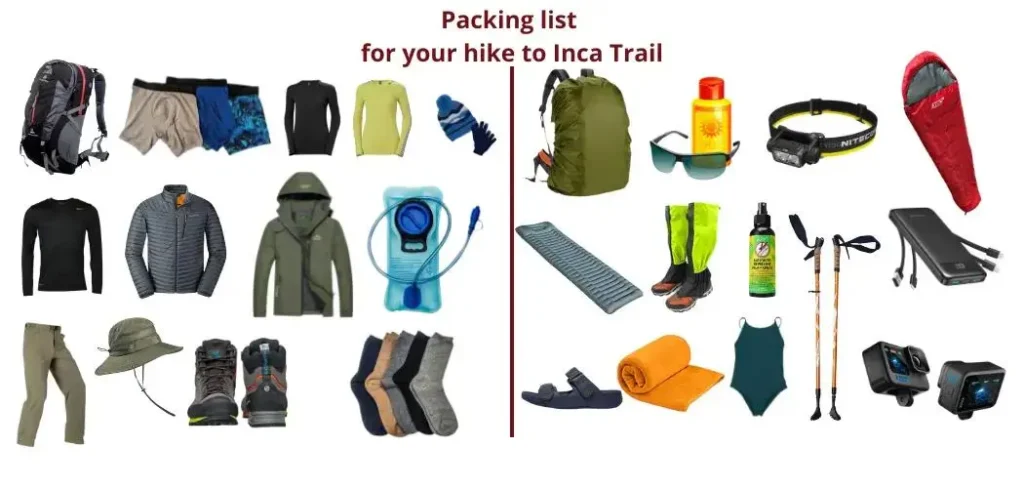
Packing correctly for the Inca Trail Machu Picchu 4-day trek requires balancing warmth for the high-altitude nights with lighter layers for the warm cloud forest sections. Furthermore, your main gear travels with porters between campsites, so your personal daypack only needs to carry what you need for each day of hiking.
Clothing and Footwear
– ✅ Waterproof hiking boots with ankle support, broken in before the trek
– ✅ Merino wool hiking socks, minimum 4 pairs
– ✅ Thermal base layers, top and leggings for cold nights at altitude
– ✅ Fleece mid-layer jacket for evenings at camp
– ✅ Waterproof hardshell jacket and pants for rain sections
– ✅ Wool beanie and waterproof gloves for Dead Woman’s Pass
– ✅ Moisture-wicking t-shirts, 3 units
– ✅ Trekking poles, strongly recommended for day two descents
Health and Safety Essentials
– ✅ Altitude sickness medication, consult your doctor before traveling
– ✅ Headlamp with fresh batteries for the 3:30 AM start on day four
– ✅ SPF 50+ sunscreen for exposed high-altitude sections
– ✅ Insect repellent for cloud forest sections on days three and four
– ✅ Water purification tablets or personal filter
– ✅ Basic personal first aid kit with blister treatment
– ✅ Original passport for permit verification at kilometer 82
Inca Trail Machu Picchu Tips from Local Guides
Before You Start
1. Book your permit the moment your travel dates are confirmed. Furthermore, every week you wait reduces available permit slots for your preferred dates.
2. Train specifically for downhill walking. Moreover, the descent from Dead Woman’s Pass on day two causes more injuries than the ascent due to the steepness and wet stone surfaces.
3. Break in your boots completely before flying to Peru. As a result, you eliminate the most common cause of blisters and trail abandonment among first-time Inca Trail trekkers.
4. Prepare your daypack load carefully the night before each stage. Furthermore, carrying unnecessary weight on day two makes the Dead Woman’s Pass climb significantly harder than it needs to be.
On the Trail
5. Start every morning at a slow, steady pace. Furthermore, experienced guides call this “paso del inca” — the Inca step — a deliberate rhythm that conserves energy across long alpine days.
6. Eat everything your cook prepares at every meal. Moreover, the caloric demand of 4 days of high-altitude trekking is significantly higher than most travelers expect.
7. Spend time at every archaeological site on day three. As a result, you arrive at Wiñay Wayna with a deep appreciation for the scale and sophistication of the Inca civilization.
8. Position yourself at the Sun Gate viewpoint before the light fully rises on day four. Consequently, you experience Machu Picchu in the exact same light that Inca travelers saw it centuries ago.
Inca Trail Machu Picchu FAQ
Book as early as possible — ideally 4 to 6 months ahead for peak season months of June, July and August. Furthermore, permits sell out within hours of becoming available for the most popular dates. As a result, travelers who wait until 2 to 3 months before departure often find their preferred dates fully booked. Always confirm availability with your operator immediately after finalizing your Peru travel dates.
Yes, without question. The Inca Trail Machu Picchu trek delivers an experience that no amount of money can replicate through any other means of reaching the citadel. Furthermore, the combination of ancient pathways, multiple archaeological sites, dramatic mountain ecosystems and the Sun Gate sunrise arrival creates a journey that most trekkers describe as the most meaningful physical experience of their lives. In addition, the strict permit quota ensures the trail never feels overcrowded.
Yes, with proper preparation. Furthermore, the Inca Trail Machu Picchu is not a technical mountaineering route — it requires no climbing skills or specialized equipment. However, day two with Dead Woman’s Pass at 4,215 meters demands good fitness and proper acclimatization. As a result, beginners who train consistently for 6 to 8 weeks before departure and spend 2 to 3 days acclimatizing in Cusco complete the trek successfully at a high rate.
Yes. Peruvian regulations require all Inca Trail trekkers to be accompanied by a licensed guide at all times. Furthermore, independent trekking on the Inca Trail is not permitted under any circumstances. Your operator assigns a certified guide to your group who manages the permit verification, trail navigation, archaeological commentary and emergency protocols throughout all 4 days.
May and September offer the best balance between good weather and permit availability. Furthermore, these shoulder season months deliver mostly clear skies, dry trails and fewer trekkers than peak July and August. In addition, temperatures at altitude are cold but manageable and the cloud forest vegetation remains lush from the preceding wet season. Book 3 to 4 months ahead for May and September departures to secure your preferred group size and operator.